Friday, September 2, 2011

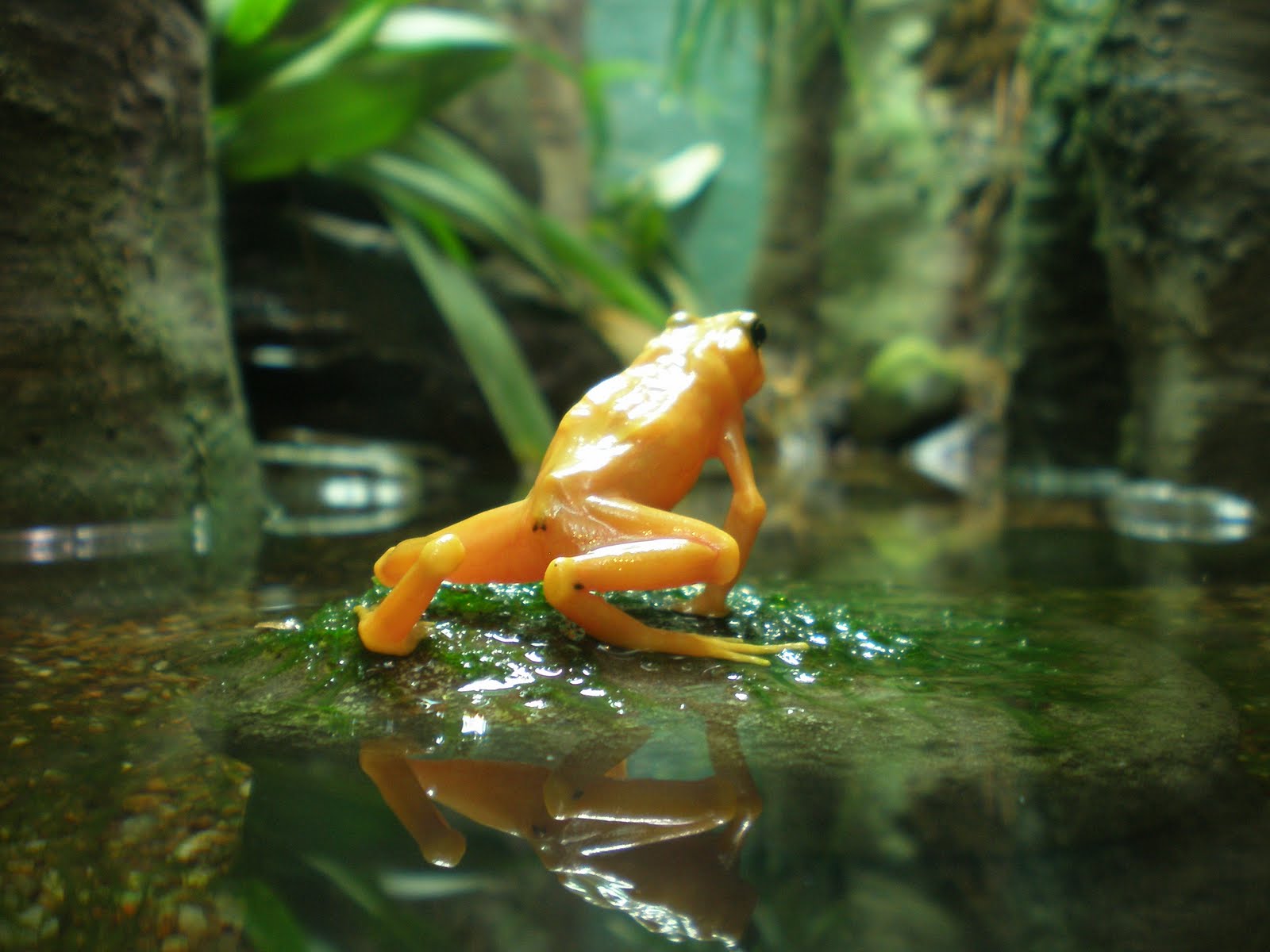
Golden Poison Frog


True Wild Life | Golden Poison Frog | The Golden Poison Frog is the most poisonous animal in the world. Unfortunately, they are on the brink of extinction because tropical rainforests are disappearing. The golden poison Frog's skin is densely coated in alkaloid poison, one of a number of poisons common to dart frogs  which prevents nerves from transmitting impulses, leaving the muscles in an inactive state of contraction. This can lead to heart failure or fibrillation.

Przewalski's Horse


True Wild Life | Przewalski's Horse | The Przewalski's Horse is the only remaining wild horse still surviving in the world. Once, it became extinct because it was hunted or it lost in the feeding frenzy with farm animals. Przewalski's Horse is a rare and endangered subspecies of wild horse  native to the steppes of central Asia, specifically China and Mongolia. At one time extinct in the wild, it has been reintroduced to its native habitat in Mongolia at the Khustain Nuruu National Park, Takhin Tal Nature Reserve and Khomiin Tal.

Mountain Zebra


True Wild Life | Mountain Zebra | The Mountain Zebra is an endangered species of equid native to south-western Angola, Namibia and South Africa. It has two subspecies, the Cape Mountain Zebra  and Hartmann's Mountain Zebra, though it has been suggested these should be considered separate species. Like all zebras, it is boldly striped in black and white and no two individuals look exactly alike. The stripe can be black and white or dark brown and white. Their stripes cover their whole bodies except for their bellies. The Mountain zebra also has a dewlap.

Wednesday, August 24, 2011

Grevy's Zebra


True Wild Life | Grevy's Zebra | The Grevy's zebra , also known as the Imperial zebra, is the largest extant wild equid and one of three species of zebra, the other two being the plains zebra and the mountain zebra. The Grevy's zebra is found in Kenya and Ethiopia. Compared with other zebras, it is tall, has large ears, and its stripes are narrower. It is more ass-like in appearance as compared to other zebras, which are more horse-like. Among their kinds who were hunted for their hides, Grevy's Zebra is the largest kind of zebra. The Grevy's Zebra's pattern is like a painting, so it is called the most beautiful of zebras. However, its beauty is its sadness, because it is hunted for its hide. Its numbers keep becoming lower and lower.

Tuesday, August 23, 2011

Asian Wild Ass

 
True Wild Life | Asian Wild Ass | The Asian Wild Ass was once considered to be among the largest population of ungulates, along with horses, cows, camels, and deer. Herds of 1,000 or more Asian Wild Asses have often been observed in Central and West Asia. Like many other large grazing animals, the asian wild ass' range has contracted greatly under the pressures of hunting and habitat loss, and of the six subspecies, one is extinct and two are endangered. The kiang , a Tibetan relative, was previously considered to be a subspecies of the asian wild ass as E. hemionus kiang, but recent molecular studies indicate that it is a distinct species. 

Labels

Albatross Alligator Amphibian Angelfish Ant Anteater Antelope Ape Armadillo Aves Avocet Axolotl Baboon Badger Bandicoot Barb Barracuda Bat Bear Beaver Bee Beetle Binturong Bird Birds Of Paradise Bison Boar Bongo Bonobo Booby Budgerigar Buffalo Butterfly Butterfly Fish Caiman Camel Capybara Caracal Carnivore Cassowary Cat Caterpillar Catfish Cattle Centipede Chameleon Chamois Cheetah Chicken Chimpanzee Chinchilla Cichlid Civet Clouded Leopard Clown Fish Coati Cockroach Collared Peccary Common Buzzard Coral Cougar Cow Coyote Crab Crane Critically Endangered Crocodile Crustacean Cuscus Damselfly Deer Dhole Discus Dodo Dog Dolphin Donkey Dormouse Dragon Dragonfly Duck Dugong Eagle Echidna Eel Elephant Emu Endangered Extinct Falcon Ferret Fish Flamingo Flatfish Flounder Fly Fossa Fox Frog Gar Gazelle Gecko Gerbil Gharial Gibbon Giraffe Goat Goose Gopher Gorilla Grasshopper Grouse Guinea Fowl Guinea Pig Guppy Hamster Hare Hedgehog Herbivore Heron Hippopotamus Horse Human Hummingbird Hyena Ibis Iguana Impala Insect Invertebrate Jackal Jaguar Jellyfish Kangaroo Kingfisher Kiwi Koala Kudu Ladybird Ladybug Larvae Least Concern Lemming Lemur Leopard Lion Lionfish Lizard Llama Lobster Lynx Macaque Mammal Mammoth Manatee Mandrill Manta Ray Marsupial Mayfly Meerkat Millipede Mole Mollusca Molly Mongoose Monkey Moorhen Moose Moth Mouse Mule Near Threatened Newt Nightingale Numbat Octopus Okapi Olm Omnivore Opossum Orang Utan Oriole Ostrich Otter Owl Oyster Pademelon Panda Panther Parrot Peacock Pelican Penguin Phanter Pheasant Pig Pika Pike Piranha Platypus Pond Skater Possum Prawn Primate Puffer Fish Puffin Puma Quail Quoll Rabbit Raccoon Raccoon Dog Rare Rat Reindeer Reptile Rhinoceros Robin Rodent Salamander Scorpion Scorpion Fish Sea Dragon Sea Lion Sea Slug Sea Squirt Sea Urchin Seahorse Seal Serval Shark Sheep Shrew Shrimp Skunk Sloth Snail Snake Spider Sponge Squid Squirrel Starfish Stoat Swan Tamarin Tapir Tarantula Threatened Tiger Toad Tortoise Toucan Turkey Turtle Vulnerable Vulture Walrus Weasel Whale Wildebeest Wolf Woodlouse Woodpecker Worm Zebra