True Wild Life | Southern Cassowary | The Southern Cassowary is a large bird that lives in New Guinea and Australia. They are flightless, but equipped with a strong kick. Their numbers continue to decline because of disappearing tropical rainforests and hunting. The Southern Cassowary also known as Double-wattled Cassowary, Australian Cassowary or Two-wattled Cassowary.
Showing posts with label Bird. Show all posts
Wednesday, June 29, 2011
Monday, May 30, 2011
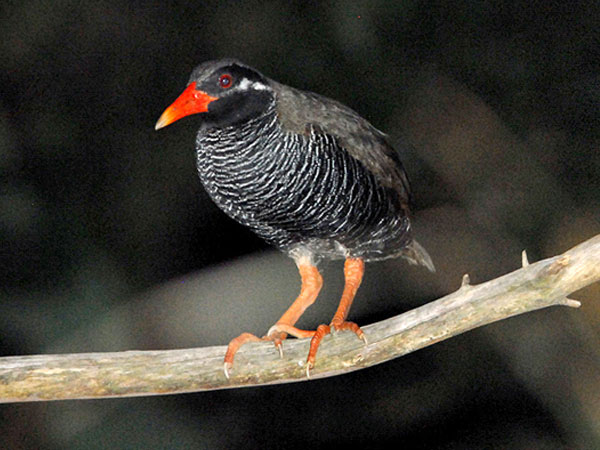
Okinawa Rail
True Wild Life | Okinawa Rail | The Okinawa Rail is a flightless bird that only lives on the main island of Okinawa. It is endemic to Okinawa Island in Japan where it is known as the Yanbaru Kuina. Its existence was only confirmed in 1978 and it was formally described in 1981 although unidentified rails had been recorded on the island since at least 1973 and local stories of a bird known as the agachi kumira may refer to this species.
Saturday, May 21, 2011
Great Spotted Kiwi
True Wild Life | Great Spotted Kiwi | The Great Spotted Kiwi, is a species of kiwi endemic to the South Island of New Zealand. It is the largest of the kiwi. There are about 22,000 Great Spotted Kiwis in total, almost all in the more mountainous parts of northwest Nelson, the northwest coast, and the Southern Alps. A minority live on islands.
Friday, April 8, 2011
Yellow-Eyed Penguin
True Wild Life | Yellow-Eyed Penguin | The yellow-eyed penguin is one of the few penguin species found north of the Antarctic Ocean, and as it's name suggests, this species of penguin is easily idenitfied by it's yellow coloured eyes and bright yellow band that runs from it's eyes round the back of the yellow-eyed penguin's head. The yellow-eyed penguin is found off the coast of the south island of New Zealand where this species gathers in colonies along the beaches and boulder fields. The yellow-eyed penguin is also found on a few of the islands of the main island including Stewart, Auckland and the Campbell Islands.
Woodpecker
True Wild Life | Woodpecker | There are around 200 species of woodpecker inhabiting the forests and woodlands worldwide. Woodpeckers are found on every continent with the exception of the polar regions, Australia and Madagascar. The smallest species of woodpecker is the Bar-breasted Piculet that only grows to 8cm in height. The Gray Slaty woodpecker from south east Asia is the largest living woodpecker in the world with some of these woodpecker individuals growing to nearly 60 cm tall.
Sunday, March 27, 2011
Vulture
True Wild Life | Vulture | The vulture is a large, carnivorous bird that is most well known for its scavenging nature. The vulture is one of the few types of bird that is found distributed so widely around the world, as vultures are found on every continent excluding the Antarctic and Australia and the islands that surround it. Different species of vultures of firstly classified into two groups, the old world vultures and the new world vultures. There are thought to be nearly 30 different species of vulture that are found worldwide.
Saturday, March 26, 2011
Turkey
True Wild Life | Turkey | The turkey is a large bird that is closely related to other game birds such as pheasants, chickens and quails. The turkey has become famous across the western world as being a special meal on large family occasions including Christmas and Thanksgiving. Despite their large size, turkeys are surprisingly adept fliers and can be seen flying beneath the forest canopy looking for somewhere to perch. Although turkeys do nest in the trees, they are most commonly found in open forests, woodlands and grasslands.
Tropicbird
True Wild Life | Tropicbird | The tropicbird is a large species of sea bird found nesting on the warmer cliffs and islands that dot our oceans. Despite having been thought to be closely related to other large sea birds such as pelicans, boobies and frigatebirds, the tropicbird has been recently classified in a group of it's own. There are three different species of tropicbird found throughout the tropical Atlantic, Pacific and Indian Oceans. The exact range and location depends on the species of tropicbird, although all three species can be found in parts of all the major oceans.
Toucan
True Wild Life | Toucan | The toucan is a medium-sized bird native to the rain forests of central and South America and the Caribbean. There are more than 40 different species of toucan that inhabit the South American jungles today. The toucan is best known for it's large colourful beak that despite it's large size, is surprisingly light due to the fact that it is made of a substance called keratin (the same substance that makes up the nails and hair of many animals including humans) . The toucan's beak measures around half the toucans body length and is used for mating, feeding and defence purposes. The toucan's bill however, is not particularly strong and so it is used more to intimidate predators rather than to fight them off.
Friday, March 25, 2011
Tawny Owl
True Wild Life | Tawny Owl | The tawny owl is a small to medium sized bird of prey that is found across Europe and in parts of Asia but tawny owls are mainly found in woodlands across Eurasia. The tawny owl is the most widespread owl in Europe and is the most of common bird of prey found in the UK. Tawny owls tend to be around 40cm tall with a wingspan of about 100cm, with the tawny owl therefore being a much stockier bird than many other species of owl in the world.
Wednesday, March 23, 2011
Swan
True Wild Life | Swan | The swan is a large aquatic bird closely related to geese and ducks. The swan is known for it's fierce temperament and the swans incredibly strong wings which are said to be able to cause dangerous (sometimes fatal) injuries to any animal the swan feels threatened by. The swan is found on both sides of the Equator across the Northern and Southern Hemispheres. The northern swan is generally white in colour with an orange beak and the southern swan tends to be a mixture of white and black in colour with red, orange or black beaks.
Tuesday, March 22, 2011
Sparrow
True Wild Life | Sparrow | Sparrows are a group of small sized birds that are found in woodlands and across farmlands all around the world. Today, there are thought to be 140 different species of sparrow spread throughout almost every continent. Historically, the true sparrows were found throughout Europe and in parts of Asia and Northern Africa. However, human travellers that settled on other continents including Australia and America introduced sparrows to these areas, where they are now considered to be part of the native wildlife.
Snowy Owl
True Wild Life | Snowy Owl | The snowy owl is also known as the Arctic owl or the great white owl. The snowy owl is primarily found within the Arctic Circle with the range of the snowy owl ranging across Canada, Greenland, Europe and Asia. The snowy owl is the official bird of Quebec in the North-east of Canada. The snowy owl is one of the largest species of owl in the world, with the average adult snowy owl growing to about 65cm tall with a wingspan of around 140cm. Snowy owls however can be smaller than this, and can even grow to more than 75cm in height.
Thursday, March 17, 2011
Royal Penguin
True Wild Life | Royal Penguin | The royal penguin is a medium to large sized species of penguin that is found inhabiting the freezing waters that surround the Antarctic continent. The royal penguin is best known for the yellow feathers than grow from it's forehead to the back of it's head and are not to be confused with the macaroni penguin which they are closely related to. Like other penguin species, the royal penguin spends the majority of it's life hunting out at sea and are usually found in the nutrient rich waters that surround Antarctica. However, royal penguins are known to only breed on Macquarie Island, a rocky south-western Pacific island that lies roughly half way between New Zealand and Antarctica.
Rockhopper Penguin
True Wild Life | Rockhopper Penguin | The rockhopper penguin is a group of penguins that are closely related and share the same love of jumping over rocks to get about, rather sliding around on their bellies in the normal penguin fashion. There are three different species of rockhopper penguin which are the western rockhopper penguin, the eastern rockhopper penguin and the northern rockhopper penguin. Rockhopper penguins are found throughout the sub-Antarctic and in regions of the southern Indian and Pacific Oceans. The regions occupied by the rockhopper penguin depend on the species. The western rockhopper is found around the tip of the South America; the eastern rockhopper breeds on sub-Antarctic islands of the Indian and western Pacific oceans and the northern rockhopper penguin breeds on islands of Tristan da Cunha as well as on Amsterdam and St Paul Islands.
Robin
True Wild Life | Robin | The robin is a small bird, originally found in only Europe and Asia. The robin today can be found across the world in parts of Africa, North America and New Zealand but all of these robin species are believed to be subspecies of the European robin. The European robin has a bright orange/red chest and is the most distinctive bird of the robin family. Despite the bright chest of the European robin, other species of female robin are fairly plain and brown in colour. The female robin is very similar in both size and appearance to the nightingale and the two are commonly confused.
Monday, March 14, 2011
Quail
True Wild Life | Quail | The quail is a small bird that inhabits woodland and forest areas around the world. There are thought to be more than 15 different species of quail, with each species of quail being found in different parts of the world and all have slightly different appearances depending on how they have adapted to their environment. Although the quail is very small sized bird, the quail belongs to the same bird family as pheasants. Quails range in size depending on the species from the Japanese quail which is around 10cm tall to the larger mountain quail that can grow up to 25 cm tall.
Sunday, March 13, 2011
Puffin
True Wild Life | Puffin | The puffin is a small black and white bird that has a distinctive, colourful orange beak. Puffins are found in coastal regions of the Northern Hemisphere. The puffin is also found in the colder Arctic Circle. A puffin tends to grow from 40cm to nearly 1m in height depending on the species. Some species of puffin, like those puffin that inhabit the Scottish west coast, are much smaller with these Scottish puffin standing at just 30 cm tall.
Saturday, March 12, 2011
Pheasant
True Wild Life | Pheasant | The pheasant is a large sized bird that is found in fields and on the edge of woodland particularly in the Northern Hemisphere. Pheasants are best known for the brightly coloured feathers (in a range of colours) and the long tail feathers of the male pheasant. The pheasant is thought to be native to Asia, with some relation to the wild chickens that are found in the jungles particularly in India. Today the pheasant can be found all over the world and there are more than 35 different species of pheasant today.
Penguin
True Wild Life | Penguin | The penguin is found pretty much only in the Southern Hemisphere, only a handful of penguins though are in the far south. The emperor penguin inhabits the icy lands of Antarctica. Despite what many think, the penguin is not only found in arctics, one species of penguin lives as far north as the Galapagos Islands.
Subscribe to:
Posts (Atom)
Labels
Albatross
Alligator
Amphibian
Angelfish
Ant
Anteater
Antelope
Ape
Armadillo
Aves
Avocet
Axolotl
Baboon
Badger
Bandicoot
Barb
Barracuda
Bat
Bear
Beaver
Bee
Beetle
Binturong
Bird
Birds Of Paradise
Bison
Boar
Bongo
Bonobo
Booby
Budgerigar
Buffalo
Butterfly
Butterfly Fish
Caiman
Camel
Capybara
Caracal
Carnivore
Cassowary
Cat
Caterpillar
Catfish
Cattle
Centipede
Chameleon
Chamois
Cheetah
Chicken
Chimpanzee
Chinchilla
Cichlid
Civet
Clouded Leopard
Clown Fish
Coati
Cockroach
Collared Peccary
Common Buzzard
Coral
Cougar
Cow
Coyote
Crab
Crane
Critically Endangered
Crocodile
Crustacean
Cuscus
Damselfly
Deer
Dhole
Discus
Dodo
Dog
Dolphin
Donkey
Dormouse
Dragon
Dragonfly
Duck
Dugong
Eagle
Echidna
Eel
Elephant
Emu
Endangered
Extinct
Falcon
Ferret
Fish
Flamingo
Flatfish
Flounder
Fly
Fossa
Fox
Frog
Gar
Gazelle
Gecko
Gerbil
Gharial
Gibbon
Giraffe
Goat
Goose
Gopher
Gorilla
Grasshopper
Grouse
Guinea Fowl
Guinea Pig
Guppy
Hamster
Hare
Hedgehog
Herbivore
Heron
Hippopotamus
Horse
Human
Hummingbird
Hyena
Ibis
Iguana
Impala
Insect
Invertebrate
Jackal
Jaguar
Jellyfish
Kangaroo
Kingfisher
Kiwi
Koala
Kudu
Ladybird
Ladybug
Larvae
Least Concern
Lemming
Lemur
Leopard
Lion
Lionfish
Lizard
Llama
Lobster
Lynx
Macaque
Mammal
Mammoth
Manatee
Mandrill
Manta Ray
Marsupial
Mayfly
Meerkat
Millipede
Mole
Mollusca
Molly
Mongoose
Monkey
Moorhen
Moose
Moth
Mouse
Mule
Near Threatened
Newt
Nightingale
Numbat
Octopus
Okapi
Olm
Omnivore
Opossum
Orang Utan
Oriole
Ostrich
Otter
Owl
Oyster
Pademelon
Panda
Panther
Parrot
Peacock
Pelican
Penguin
Phanter
Pheasant
Pig
Pika
Pike
Piranha
Platypus
Pond Skater
Possum
Prawn
Primate
Puffer Fish
Puffin
Puma
Quail
Quoll
Rabbit
Raccoon
Raccoon Dog
Rare
Rat
Reindeer
Reptile
Rhinoceros
Robin
Rodent
Salamander
Scorpion
Scorpion Fish
Sea Dragon
Sea Lion
Sea Slug
Sea Squirt
Sea Urchin
Seahorse
Seal
Serval
Shark
Sheep
Shrew
Shrimp
Skunk
Sloth
Snail
Snake
Spider
Sponge
Squid
Squirrel
Starfish
Stoat
Swan
Tamarin
Tapir
Tarantula
Threatened
Tiger
Toad
Tortoise
Toucan
Turkey
Turtle
Vulnerable
Vulture
Walrus
Weasel
Whale
Wildebeest
Wolf
Woodlouse
Woodpecker
Worm
Zebra